In court(3 pending lawsuits: MIDA constitutionality, B.E.A.R. referendum appeal, and Kanter v. O'Leary federal defamation)filed September 24, 2026 · filing (opens in a new tab)
O'Leary Digital and the Military Installation Development Authority (MIDA) propose the Stratos Project data center campus in Hansel Valley, Box Elder County, Utah, north of the Great Salt Lake. State filings specify a 7.5 GW long term buildout (7,500 MW, with up to 1.5 to 2 GW in Phase 1) powered by on site methane gas reciprocating internal combustion engines (RICE) fed via the Ruby Pipeline, alongside MIDA and developer figures of 9.0 GW (9,000 MW, modeled in the October 26, 2026 EmPower Analytics Group air dispersion report) and an upper bound of 9.5 GW (9,500 MW) reported by KSL.com on September 24, 2026. Box Elder County commissioners consented to the 40,000 acre MIDA project area on May 4, 2026 and exempted Stratos from the county's 180 day data center moratorium adopted June 17, 2026; following pushback from Utah Senate President J. Stuart Adams, O'Leary Digital stated on June 4 and October 1, 2026 that the campus footprint would be reduced to roughly 13,000 to 20,000 acres, though no surveyed MIDA boundary amendment has been filed. Utah Division of Water Rights Change Application a55167 on Water Right 13 2 seeks 1,712 acre feet a year (1,528,767 gallons a day withdrawal), while three lawsuits proceed in state and federal court. It is waiting on permits, since September 24, 2026. Kevin O'Leary and Fox News Network LLC filed separate Motions to Dismiss in the federal defamation lawsuit Kanter et al. v. O'Leary et al (September 24, 2026).
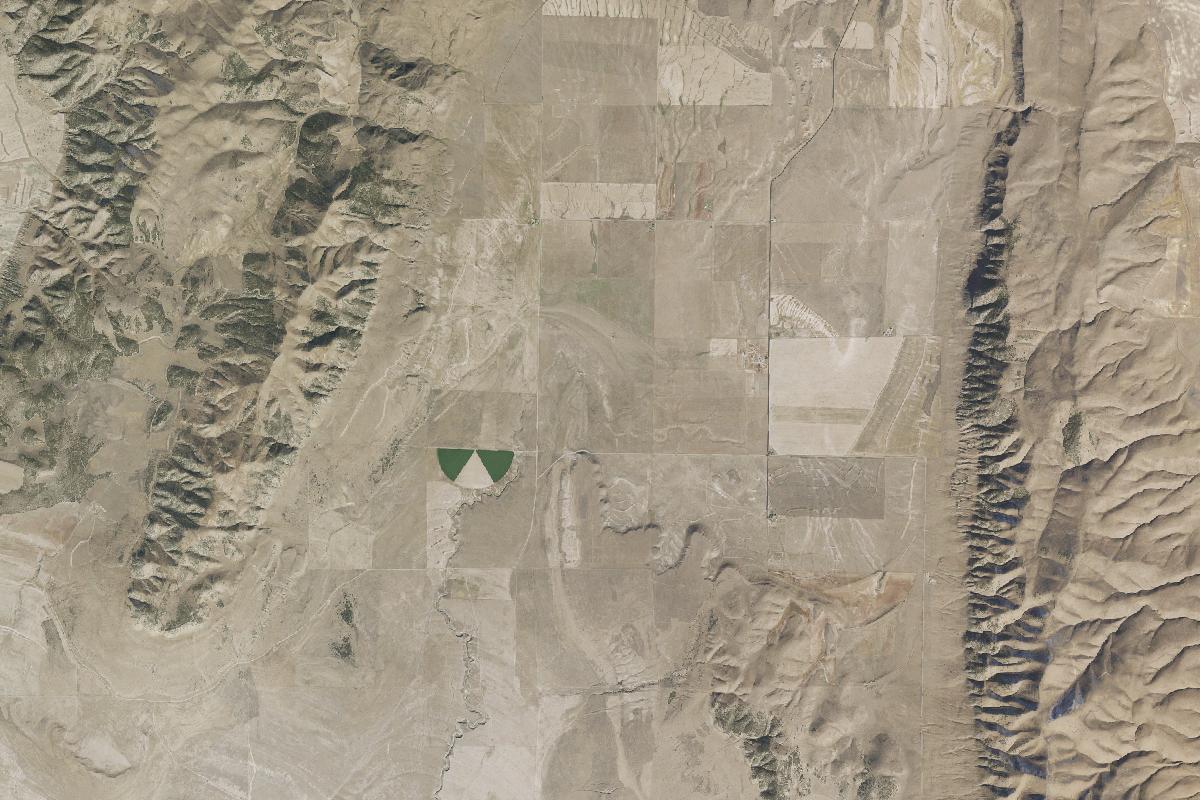
Tap a pin for the data center, the parcel for its record
This record: Proposed, ringed
data center
Dashed edge: the exact site is not in the public record
Smaller pins: 22 other published records in Utah
Details
this record's location, ringed
parcel outline, from the county parcel record
city limits, U.S. Census Bureau, on a town level record
county boundary
The other pins are the published projects in the same state, each in its stage color. The imagery beneath is the USGS national orthoimagery, public domain, shown so the land around the site can be read.
How to read this page. Every fact links to the source it rests on; a number in brackets is its place in the source list. A figure no source gives reads Not disclosed, and nothing is estimated. Where sources give different figures, each is shown with who gave it, and another source's figure never stands in for the record's own. Entries are added and never overwritten; corrections are listed under What happened.
What is known
Each figure as its source gave it. The number in brackets is its place in the source list.
Land
40,000 acreswhat a permit allows40,000 acres in the April and May 2026 MIDA project area in Hansel Valley consented to by Box Elder County on May 4, 2026; following pushback from Utah Senate President J. Stuart Adams, the developer stated on June 4 and October 1, 2026 that the campus footprint would be reduced to roughly 13,000 to 20,000 acres, though no surveyed MIDA boundary amendment has been filed to replace the 40,000 acre project area.
7.5 GWthe developer's figureThree gigawatt figures appear across public filings and reporting: 7.5 GW (7,500 MW) in the developer's current state filings (with up to 1.5 to 2 GW in Phase 1, powered by on site methane gas reciprocating internal combustion engine, or RICE, generation); 9.0 GW (9,000 MW) stated by MIDA and by O'Leary Digital CEO Paul Palandjian on May 2, 2026 (KSL.com) and modeled in the October 26, 2026 EmPower Analytics Group full buildout scenario; and 9.5 GW (9,500 MW) cited as the upper bound on site generating capacity in KSL.com's September 24, 2026 report.About 0.73 times New York City's summer peak demand in 2024.
1,528,767 gallons a day (withdrawal)applied for558 million gallons a year (1,712 acre feet a year per Utah Division of Water Rights Change Application a55167 on Water Right 13-2; 1,712 acre feet a year × 325,851.43 gallons per acre foot = 557,857,648 gallons a year, about 558,000,000 gallons a year ÷ 365 days = 1,528,767 gallons a day).What at most 5,096 American families use at home, at the EPA's more than 300 gallons a family a day (the EPA gives no year for it).
Proposed 7.5 GW on site methane gas reciprocating internal combustion engine (RICE) generation across 15 blocks (500 MW each) fed via the Ruby Pipeline (up to 2 GW Phase 1; 9.0 GW MIDA and EmPower full buildout scenario; 9.5 GW upper bound in KSL reporting)as stated by the source
A comparison is arithmetic on two published rows and is never a new fact (how comparisons are made).
Utah Division of Water Rights Change Application a55167 on Water Right 13-2: 1,712 acre feet a year × 325,851.43 gallons per acre foot = 557,857,648 gallons a year (about 558 million gallons a year); 558,000,000 gallons a year ÷ 365 days = 1,528,767 gallons a day (withdrawal).
Stratos Project, water: 1,528,767 gallons a day.
Water used at home each day by the average American family, more than: 300 gallons a day.
1,528,767 ÷ 300 = 5,095.89 (gallons a day over gallons a day).
The two count different water: the data center figure is water withdrawn from its source, and the EPA's is water used at home, which the EPA does not split into water consumed and water returned.
A comparison is arithmetic on two published rows and is never a new fact (how comparisons are made).
What it is for, as a source states it: AI, type not stated, Cloud, Government and defense. Promises to the community in the source's words: Leaseback agreements for grazing, ranching and farming on the project land; AI curriculum with local schools.
Every field, with who said it and when (Researcher view)
Proposed 7.5 GW on site methane gas reciprocating internal combustion engine (RICE) generation across 15 blocks (500 MW each) fed via the Ruby Pipeline (up to 2 GW Phase 1; 9.0 GW MIDA and EmPower full buildout scenario; 9.5 GW upper bound in KSL reporting)
How much power it needs, also reported:9 GW, 2026 (Utah News Dispatch (opens in a new tab): Stratos project is expected to produce 9 gigawatts of energy, ms.now (opens in a new tab): Project still plans to utilize as much as 9 gigawatts of power, YouTube (opens in a new tab): The Stratos Project has a total planned power capacity of 9 gigawatts at full buildout across 40,000 acres in Box Elder County, The Christian Science Monitor (opens in a new tab): At full build, the Stratos Project estimates it would consume 9 gigawatts of electricity, grist.org (opens in a new tab): Stratos Project would demand 9 gigawatts of power at full completion, KSL.com (opens in a new tab): Paul Palandjian, CEO and co founder of O'Leary Digital, said the power plant would produce up to nearly 9 gigawatts of electricity, KSL.com (opens in a new tab): Total project power generating capacity over long haul could be up to 9 gigawatts.); 1.5 GW, 2026 (KSL (opens in a new tab): The first phase of power generation for the Stratos Project will be limited to 1.5 gigawatts, as O'Leary Digital's chief executive described the updated plans., KSL.com (opens in a new tab): First phase of power generation element limited to 1.5 gigawatts.); 16 GW, 2026 (KSL (opens in a new tab): Physicist Robert Davies of Utah State University estimated the project could reach 16 gigawatts at full capacity); 9.5 GW, 2026 (KSL (opens in a new tab): Stratos project plans call for a complex of data centers on 20,000 acres in Hansel Valley with up to 9.5 gigawatts of power generating capacity); 3 GW, 2026 (YouTube (opens in a new tab): Phase 1 of the project requires 3 gigawatts of power)
.
How much water it would use, also reported:900,000 gallons a day, 2026 (KSL.com (opens in a new tab): At full buildout, project will consume under 900000 gallons of water a day on average after recycling.)
.
Jobs once it runs, also reported:2,000 jobs, 2026 (Utah News Dispatch (opens in a new tab): Stratos development could create 2,000 jobs within the project area, KSL (opens in a new tab): Project backers cited roughly 2,000 permanent positions, Utah News Dispatch (opens in a new tab): Stratos developers say the project would provide 2,000 permanent skilled jobs); 2,000 to 4,000 jobs, 2026 (KUTV (opens in a new tab): Brookings research found counties hosting major data centers can see overall employment rise by roughly 2,000 to 4,000 jobs after several years); 4 to 5 percent, 2026 (KUTV (opens in a new tab): Brookings research on 770 data centers found when a county gets its first data center, total private employment rises by 4 to 5 percent); 22 percent, 2026 (KUTV (opens in a new tab): Brookings research found information sector employment rises by 22 percent when a county sees its first data center); 11 percent, 2026 (KUTV (opens in a new tab): Brookings research found construction employment rises by 11 percent when a county sees its first data center)
.
Tax it would pay each year, also reported:100,000,000 dollars per year, 2026 (KSL.com (opens in a new tab): Stratos project promised more than 100 million dollars in annual tax revenue to Box Elder County at full capacity.)
.
A blank value cell means not disclosed by any source on file; a blank basis cell means the source gave the figure without saying on what basis.
The developer's figure is what the company said; what a permit allows is the ceiling a permit sets; measured means observed. Water is in gallons a day or a year, whichever the source stated; a tax claim given as a range shows both ends, each linked to the source that gave it.
Named by the recordThe agreement or filing that fixes the reduced project area. Today: The June 1 letter, the Senate's June 4 statement that O'Leary agreed, and August and September reporting of 20,000 acres.
Named by the recordThe February 2026 announcement itself, dated. Today: Only Yahoo Finance's August account says February.
Named by the recordMIDA's April approval, its resolution or minutes and the day. Today: KUER and Utah News Dispatch say April.
Named by the recordThe first water right change application and its filing date. Today: Its withdrawal on May 5.
Named by the recordThe court, the parties and the filing date of the referendum litigation. Today: August reporting that suits exist.
Named by the recordThe day the 180 day moratorium of June 10 ends, when the county states it.
Named by the recordThe project area outline traced from the county's map. Today: The pin sits at the county's center point.
Named by the recordAny tenant, when one is named. Today: None is.
What was decided
Acts of Box Elder County and the cities in it about data centers, on the record with their source. A rule about the area is not a decision about this record.
Three lawsuits related to project are pending, with opponents seeking reversal of county decision and challenging constitutionality of actions allowing project to proceed.
Box Elder County filed a response asking the 1st District Court in Brigham City to dismiss the lawsuit over its rejection of the Stratos referendum, arguing that neither of the two Stratos resolutions is legislative.
O'Leary Digital filed a response asking the 1st District Court in Brigham City to dismiss the lawsuit over Box Elder County's rejection of the Stratos referendum, arguing that the county's two Stratos resolutions were administrative and cannot be put to voters.
Defamation suit filed by Alliance for a Better Utah, Elevate Strategies, Joshua Kanter and Gabrielle Finlayson on July 15 alleging O'Leary defamed them by suggesting they had links to China.
Box Elder County commissioners unanimously passed an ordinance imposing a 180 day moratorium on new data centers and data center power plants on unincorporated land while the county studies zoning and development standards.
Box Elder County attorney Stephen Hadfield denies BEAR referendum applications, concluding approved resolutions were administrative actions not subject to referendum
Alliance for a Better Utah and five unnamed Box Elder County plaintiffs filed suit in 3rd District Court in Salt Lake City arguing that the approvals of the Stratos plans by the Military Installation Development Authority and Box Elder County commissioners violate the Utah Constitution, and asking that they be nullified.
Thousands of Utahns submitted negative comments, and hundreds of Box Elder residents attended May 4 county commission meeting shouting down politicians.
Box Elder County Commission unanimously approved a resolution giving MIDA consent to create the Stratos project area on land owned by Department of Defense and Utah Trust Lands Administration
Commissioners laid out guardrails including county representation on project board, dark skies protections, noise standards and public safety assurances
Box Elder County commissioners voted unanimously to consent to the Stratos MIDA project area at a special meeting where about 1,100 people gathered and a referendum effort formed within days.
Box Elder County Commission adopted Ordinance 642 consenting to the Utah Inland Port Authority AgriTech Project Area near Garland and Tremonton for agricultural technology and manufacturing, a separate tax increment district distinct from the May 2026 Military Installation Development Authority Stratos data center project area in Hansel Valley.
May 4, 2026Tremonton, UTBox Elder County Commission Special Meeting at Box Elder County FairgroundsBox Elder County Commission4 clips
At a special meeting at the Box Elder County Fairgrounds in Tremonton attended by approximately 1,100 residents, Box Elder County Commissioners Tyler Vincent, Boyd Bingham, and Stan Summers announced no public comment would be taken, exchanged words with the crowd, walked off the stage while attendees chanted People over profit, and reconvened in a closed room via video call projected onto the arena screen to vote 3 to 0 approving Resolution 26-14 and the 40,000 acre Stratos data center project area interlocal agreement with the Military Installation Development Authority.
Tyler Vincent, Boyd Bingham, and Stan Summers, Box Elder County CommissionersElected Officialtranscribed from the official recording
"This is a special commission meeting to consider the interlocal agreement with the Military Installation Development Authority. We will not be taking public comment at this meeting today."
Boyd Bingham, Commissioner, Box Elder County CommissionElected Officialtranscribed from the official recording
"Grow up. For hell's sake, grow up."
Tyler Vincent, Commissioner, Box Elder County CommissionElected Officialtranscribed from the official recording
"We will not allow shouting, we will not allow cat calling. We expect you to be kind. Can you be quiet and let our citizens hear what needs to be said, please?"
Tyler Vincent, Boyd Bingham, and Stan Summers, Box Elder County CommissionersElected Officialtranscribed from the official recording
"People over profit! People over profit! All in favor of the resolution and interlocal agreement with MIDA say aye. Aye. Aye. Aye. Motion carries unanimously 3 to 0."
Kevin O'LearyChairman, O'Leary Ventures and O'Leary Digital (Stratos Developer)
Venue:CNN Newsroom Broadcast & Fox 13 News Utah
"Sustainability concerns around air, water use, heat, and noise pollution are at the heart of our proposal. The facility uses a closed loop cooling system that recirculates water with little to no ongoing water consumption."
CNN Broadcast Transcript & Fox 13 Utah Timestamp 04:12
Utah Division of Water Rights Change Application a55167 on Water Right 13-2
Change Application a55167 · Water Right 13-2 (O'Leary Digital Utah DC Sub I, LLC)
Agency or Venue:Utah Division of Water Rights
"Change Application a55167 on Water Right 13-2 filed by O'Leary Digital Utah DC Sub I, LLC in Hansel Valley seeks industrial groundwater withdrawal of 1,712.0 acre feet per year (equivalent to 1,528,767 gallons per day) for data center cooling and power generation."
Kevin O'LearyChairman, O'Leary Ventures and O'Leary Digital (Stratos Developer)
Venue:Fox News Broadcast & Social Media Statements
"Ninety percent of the protesters against the data center project were bused in from out of state with paid signs, and three Utah individuals opposing the project are funded by money moving through Arabella Advisors tracing back to China."
Box Elder County Clerk Referendum Petition on Resolution 26-14 (MIDA Stratos Project Area), 1st District Court Filing & June 25 Retraction
Resolution 26-14 Referendum Application · 1st District Court Petition · June 25, 2026 Retraction
Agency or Venue:Box Elder County Clerk, 1st District Court, and On Air Retraction Record
"Referendum petitions challenging Resolution 26-14 and the MIDA Stratos Project Area Interlocal Cooperation Agreement were filed May 11, 2026 by local Box Elder County registered voters organized as Box Elder Accountability Referendum and Box Elder County Alliance for Responsible Growth. On June 25, 2026, Kevin O'Leary issued a written retraction stating he had 'no evidence' linking Utah opponents to China, and Fox News anchor Maria Bartiromo issued an on air apology on June 26, 2026."
Venue:Utah Senate Correspondence, NBC News, and Moneywise
"On June 1, 2026, O'Leary called Senate President J. Stuart Adams' demand for a 75 percent reduction from 40,000 acres to 10,000 acres 'outrageous'; on June 4, 2026, the Utah Senate announced O'Leary agreed to a 75 percent reduction to 10,000 acres; on August 13, 2026, O'Leary stated the campus was cut by half to 20,000 acres."
Box Elder County Resolution 26-14 & MIDA Stratos Project Area Interlocal Agreement and Subsequent Engineering Filings
Box Elder County Resolution 26-14 · MIDA Stratos Project Area (40,000 Acres / 9 GW vs. 7.5 GW)
Agency or Venue:Box Elder County Commission & Military Installation Development Authority (MIDA)
"Resolution 26-14 and the MIDA Interlocal Cooperation Agreement adopted May 4, 2026 consent to an approximately 40,000 acre MIDA Project Area in Hansel Valley for up to 9 gigawatts of onsite natural gas generation (distinct from Box Elder County Ordinance 642 of December 17, 2025, which established the separate Utah Inland Port Authority AgriTech Project Area near Garland and Tremonton). Subsequent October 2026 water filings describe 11 data center clusters and 7.5 gigawatts of thermal power generation across 2,000 to 2,500 developed acres within a 20,000 acre boundary, while MIDA has not adopted an amended project area boundary resolution."
Venue:Box Elder County Commission Special Meeting at Tremonton Fairgrounds
"We will not be taking public comment at this meeting today... Grow up. For hell's sake, grow up... All in favor of the resolution and interlocal agreement with MIDA say aye. Aye. Aye. Aye. Motion carries unanimously 3 to 0."
Box Elder County Commission 180 Day Moratorium on Unincorporated Data Centers (Exempting MIDA Stratos Area)
Box Elder County 180 Day Data Center Moratorium Ordinance · June 10, 2026
Agency or Venue:Box Elder County Commission & Utah Public Radio (NPR)
"Five weeks after voting 3 to 0 via closed room video call to approve the 40,000 acre Stratos MIDA project area without public comment, Box Elder County Commissioners passed a 180 day moratorium on new data centers and data center power plants on unincorporated county land, while stating the moratorium does not apply to the Stratos project area already transferred to MIDA."
"Concerns about water and power use at the Box Elder County data center contain incorrect information. The project is built for this use, is right next to a natural gas pipeline so they can build their own power plant, and the state will not run out of water or power."
Agency or Venue:KUER 90.1 Utah (NPR) & Utah News Dispatch
"The approval process surrounding the Stratos project was not good. MIDA has had mission creep from its initial responsibilities and goals, and I will push legislation for major reform to MIDA, including a larger role for the governor's office and closed loop cooling requirements."
"That's never going to happen. The very first phase will be natural gas, but the other phases should not be. They should be nuclear, and they should be geothermal, and solar and other technology."
Column B · Primary Government Record
O'Leary Digital State Water Rights Filing and EmPower Analytics / NRDC Air Modeling of 7.5 GW to 9.0 GW Methane Gas RICE Buildout
Utah Division of Water Rights Change Application a55167 (Water Right 13-2) · EmPower Analytics Group Air Dispersion Report
Agency or Venue:Utah Division of Water Rights & EmPower Analytics Group for NRDC
"State filings by O'Leary Digital Utah DC Sub I, LLC specify a 7.5 gigawatt buildout across 15 blocks (500 MW each) powered by on site methane gas fired reciprocating internal combustion engines (RICE) fed via the Ruby Pipeline, with EmPower Analytics modeling showing up to 3,140 tons per year of PM2.5 and 5 to 45 premature deaths per year across a 9 GW gas scenario."
Fast Company reported on the EmPower Analytics Group and NRDC air modeling for Stratos, quoting EmPower Analytics Group Founder and CEO Michael Cork on the multi state health harms modeled under both combined cycle gas turbine and methane gas RICE engine scenarios.
EmPower Analytics Group and the Natural Resources Defense Council (NRDC) published air dispersion modeling (third party estimate, modeled, advocacy commissioned) noting developer state filings specify a 7.5 GW buildout using methane gas reciprocating internal combustion engines (RICE) and projecting that a 9 GW gas buildout would emit up to 3,140 tons per year of PM2.5, linked to 5 to 45 premature deaths per year and $75 million to $690 million per year in health damages across Utah and downwind states as far east as Illinois.
(source date; the content gives no date of its own)
O'Leary Digital Utah DC Sub I, LLC refiled Change Application a55167 on Water Right 13-2 (underlying right held by Bar H Ranch, Inc.), proposing to divert 1,712 acre-feet per year (~558 million gallons/year) from Salt Wells Spring Stream in Hansel Valley for industrial cooling and on site power generation makeup. Supported by Loughlin Water Associates hydrologic evaluation and Beairsto & Associates mass balance assessment (Exhibit B). Under Utah Division of Water Rights rules, the filing enters two weeks of formal advertising followed by a 20 day statutory public protest window.
KSL.com reported that O'Leary Digital continues pre construction design work for a reduced ~13,000 acre Stratos campus (with Phase 1 power limited to 1.5 GW) while three lawsuits proceed in state and federal court.
Kevin O'Leary and Fox News Network LLC filed separate Motions to Dismiss in the federal defamation lawsuit Kanter et al. v. O'Leary et al. (U.S. District Court for the District of Utah, Case No. 2:26 cv 00664).
Governor Spencer Cox said at his monthly news conference that the Stratos approval process was not good and that he would push legislation to reform the Military Installation Development Authority, including a larger role for the governor's office.
Joshua S. Kanter, Gabrielle S. Finlayson, Alliance for a Better Utah, Inc., and Elevate Strategies LLC (represented by Matthew Platkin of Platkin LLP, Alan L. Smith, and David R. Irvine) filed a 70 page federal defamation complaint in the U.S. District Court for the District of Utah (Kanter et al. v. O'Leary et al., Case No. 2:26 cv 00664, Doc. 1, assigned to Judge Tena Campbell on September 1, 2026).
Kevin O'Leary posted on social media stating he had "no evidence" that Alliance for a Better Utah, Elevate Strategies, Joshua Kanter, or Gabrielle Finlayson were funded by China or the Chinese Communist Party; Fox Business host Maria Bartiromo read the clarification on air on June 26, 2026.
Box Elder County commissioners passed a 180 day moratorium on new data centers and data center power plants on unincorporated county land, which county officials said does not apply to the Stratos project area under MIDA's land use authority.
In a letter of June 4, 2026 answering Senate President J. Stuart Adams's letter of June 1, Kevin O'Leary agreed to remove 19,430 acres around Locomotive Springs and another 620 acres from the Stratos project area, about half of its 40,000 acres.
Alliance for a Better Utah joined a Utah state court lawsuit challenging the creation, composition, and constitutionality of the Military Installation Development Authority (MIDA) project area in Box Elder County, alongside a separate state lawsuit filed by project opponents appealing the county referendum rejection (in which O'Leary Digital and Box Elder County moved to dismiss).
(source date; the content gives no date of its own)
O'Leary announced Stratos proposal in February after discussing with Gov. Spencer Cox starting in January; Box Elder residents did not learn of proposal until late April public hearing.
· approved (source date; the content gives no date of its own)
Project received initial approval from Utah Military Installation Development Authority and Box Elder County Commission with unanimous vote, despite massive public opposition from residents.
Utah Senate President J. Stuart Adams sent O'Leary a letter calling for a 75% reduction in the project's footprint, from 40,000 acres to approximately 10,000 acres
Box Elder County Attorney Stephen R. Hadfield rejected three referendum applications, finding the commission's resolutions were administrative actions that cannot be referred to voters under Utah law.
Hundreds of people rallied on the Utah Capitol steps demanding a halt to the project, with speakers raising air quality, greenhouse gas and water supply concerns.
The second water right change application for the project, filed by Murray Hollow L.C., was withdrawn by a notice dated May 22 that gave no reason, after nearly 700 protest letters had been filed against it.
(source date; the content gives no date of its own)
Data center developers initially said the project would consume 9 gigawatts of power at full build, with all electricity coming from an on site natural gas plant
Demonstrators rallied at the Utah Capitol and delivered a letter signed by about 6,000 people asking Governor Spencer Cox to take binding action on the Great Salt Lake and the project.
Kevin O'Leary appeared on Fox Business (Mornings with Maria) claiming that "two cells inside of Utah" opposing the Stratos Project were acting as "proxies for the Chinese government."
The Box Elder Accountability Referendum filed two referendum applications to put the county commission's approval before voters, which would require 5,422 signatures in 45 days if the applications were accepted.
Kevin O'Leary told CNN that developers had invested about 20 million dollars, would seek letters of intent from tenants and further investment for a project that could cost more than 100 billion dollars, and aimed to have the first gigawatt operating within two years.
The first water right change application for the project, filed by the landowner to move water from irrigation to industrial use, was withdrawn, and the company said it would refile with additional supporting information.
Box Elder County commissioners voted unanimously for two resolutions consenting to a Military Installation Development Authority project area for a 40,000 acre data center campus with its own natural gas power plant, at a special meeting attended by about 1,100 people.
Restored canonical O'Leary Digital and MIDA Hansel Valley project summary and 40,000 acre MIDA project area, removing AgriTech Inland Port Ordinance 642 text and disambiguating 7.5 GW / 9.0 GW / 9.5 GW capacity and 40,000 / 20,000 / 13,000 acre figures. The old and new text.
· the capacity mw of a projects row
An earlier September 2026 version of stratos-box-elder-ut displayed 9.5 MW (noted by Hoodline on September 25, 2026) instead of gigawatt scale capacity due to a megawatt/gigawatt unit entry error when recording KSL.com's 9.5 gigawatts figure; corrected to gigawatt scale (7,500 MW in state filings, alongside 9,000 MW in MIDA and EmPower disclosures and 9,500 MW in KSL reporting). The old and new text.
· the effective at of a status history row
Dated by its source: the Utah Senate's release on O'Leary's commitment is dated June 4, 2026; the entry had carried the day a later report was read. On the editor's word, October 15, 2026. The old and new text.
· the summary of a projects row
The summary named the 40,000 acre project area alone; O'Leary's June 4, 2026 commitment to remove about half of it (KUER, June 4, 2026) now sits beside it. On the editor's word, October 15, 2026. The old and new text.
· the site acres source url of a projects row
Sourced to the authority's own Stratos page, which states the project area as approximately 40,000 acres. On the editor's word, October 15, 2026. The old and new text.
· the site acres disclosed as of a projects row
The 40,000 acres is the project area the Military Installation Development Authority designated, which the Box Elder County Commission consented to on May 4, 2026; it is not an outside estimate. On the editor's word, October 15, 2026. The old and new text.
Wonder Valley's private gas generation and water recycling deliver grid independence without competing with Wasatch Front residential water or power demands.
Kevin O'Leary, Investor, Stratos Project / O'Leary Ventures · October 17, 2026 · paraphrased · FOX 13 (opens in a new tab)local outlet
Gov. Spencer Cox has called on the federal government to create more regulatory policy on AI, though the state is considering creating additional legislation itself
166 more on this page, one per speaker and claim; 181 statements in all
"The technology choices do change the size of harm a lot, but every gas scenario we evaluate harms health. In either scenario, if you are going to build a facility this size with methane gas, there are going to be health harms."
Hansel Valley residents and farmers voiced alarm over groundwater depletion from 1,712 acre-feet industrial pumping, unmitigated turbine noise from 15 natural gas generation blocks, and the county's refusal to put the zoning overlay to a public ballot pending 1st District Court review.
7.5 GW of thermal generation and 11 data center clusters cannot operate without massive evaporative consumption in an arid Great Salt Lake sub basin, and shifting 1,712 acre-feet of agricultural rights to industrial cooling in Hansel Valley directly threatens down gradient spring flows into the lake.
Closed loop cooling with 10% freshwater makeup from agricultural water right 13-2 preserves Hansel Valley aquifer levels while avoiding any direct Great Salt Lake tributary depletion.
Paul Palandjian, CEO of O'Leary Digital, stated that public sentiment matters and the Box Elder County project includes elements to address public concerns.
Humans First conducted the 29th stop of its nationwide Data Center Revolt tour in Brigham City on October 1, 2026, with the tour starting in Texas on September 12.
Paul Palandjian said 'The project is not on hold,' and that O'Leary Digital is in early design and engineering of the project's infrastructure, gas supply and power generation, with engineering, environmental and economic impact studies underway under guidelines set by the state of Utah and the Military Installation Development Authority.
Kevin O'Leary and Fox News seek dismissal of defamation lawsuit from Stratos opponents; argue statements about Chinese funding connections were protected speech
Zach Boyd said the U.S. does have a lead over China in AI, depending on how you measure the race, and the nation should be able to maintain it for some time
Larger hyperscale facilities generally support more permanent workers, particularly when they operate advanced computing equipment or include their own power generation infrastructure
President Donald Trump posted on Truth Social saying data centers will serve economic self interest and national security, telling supporters to 'let Data Reign' or risk being 'backwards and poor'
The article describes data center opposition as rooted in opposition to water rationing, spikes in electrical bills, and resource plunder affecting quality of life
Ryan Cooper of The American Prospect characterizes the data center rollout as reflective of Silicon Valley arrogance by billionaires promoting AI as revolutionary and requiring trillions in spending
Shon Hiatt, associate professor at USC, found investor owned utilities like Rocky Mountain Power experienced no effect on power prices from data center entry from 2020 to 2025
Trump warned that if Americans 'kill the Golden Goose' on data centers, 'you will have only yourselves to blame' and that China is happy about anti data center sentiment
Growing cross partisan grassroots opposition to the Stratos data center in Utah demanding agency, fairness, and accountability in development decisions
The thermal energy coming off the Stratos Project could be equivalent to 23 atomic bombs being deposited on this valley every day in the form of waste heat, potentially raising nighttime temperatures by as much as 12 degrees Fahrenheit
The project raises significant concerns regarding energy and water usage, potentially requiring billions of gallons annually in a state already facing drought conditions
Robert Davies, associate professor of physics at Utah State University, calculated the project's electricity consumption at more than double what the developers suggest
Texas Democratic gubernatorial candidate Gina Hinojosa asserted that Gov. Greg Abbott is too sympathetic to data centers and that there needs better balance between tech and community concerns
Pennsylvania Gov. Josh Shapiro shifted his stance from generally supporting data centers to placing restrictions after Republican opposition criticism, recently signing an executive order imposing new rules
Ohio Democratic Senate candidate Sherrod Brown is running an ad calling incumbent Sen. Jon Husted the 'face of data centers' for supporting tax breaks and economic benefits
Tim Davis, head of Utah's Department of Environmental Quality, told lawmakers the state has 'major gaps' in regulating potential impacts of new data centers, particularly heat and noise
Davis stated that the Department of Environmental Quality has not yet begun air quality permitting work for the Box Elder County Stratos project and that once it does, it will take a year just to obtain data on existing air quality before developers can apply
Jake Garfield, Utah Office of Energy Development Deputy Director, said adopting new water efficient technologies is necessary in a state with constrained water resources
Position note: Follows earlier support for Utah data center expansion, shifting in August 2026 toward calling for reform of the Military Installation Development Authority after the Stratos project controversy.
Context & source notes
Provenance: Paraphrased; content date; reported from elsewhere.
Rep. Jon Hawkins, R Pleasant Grove, chair of the Economic Development and Workforce Services Interim Committee, stated that lawmakers have received probably hundreds of emails on data centers and that it is a big concern
Tim Davis, commissioner of Utah's Department of Environmental Quality, noted that no single state agency can fully approve a data center on its own and showed lawmakers a chart displaying many layers of approvals required
Rep. Doug Fiefia, R Herriman, expressed concern about who constituents could hold accountable if something falls through the cracks in a data center approval process
Jessica Wiarda, Salt Lake City resident, expressed concerns about data center effects on wildlife, especially deer, and about lack of public information on the Stratos project before officials voted on it
Three fellows at the Aspen Institute's Aspen Policy Academy undertook research into data center growth in Utah and the Great Salt Lake water level as part of the 2024 Science and Technology Policy Fellowship
Feras Batarseh, Virginia Tech professor and AI lab director, said groundwater is connected to surface water and ten percent of the Great Salt Lake's water comes from groundwater
Curtis said the Stratos Project is a massive data center campus that sparked opposition in the state because of its magnitude and quick approval process through the Military Installation Development Authority
Curtis said he wants to work on bringing reliable, predictable measuring techniques at the federal level so the public can have access to standard metrics to determine whether projects are sustainable
Fox News journalist Maria Bartiromo apologized on behalf of Fox News on June 26 for airing unsubstantiated claims about Chinese ties to data center opponents
Kevin O'Leary clarified in a June 25 social media post that he has no evidence that Alliance for a Better Utah or Elevate Strategies are funded by China or the Chinese Communist Party
Utah Senator Todd Weiler apologized on social media on June 30, saying he was duped after posting earlier claims about Chinese funding of Alliance for a Better Utah
Heat generated by the Stratos data center complex could create a local heat island that raises daytime temperatures by five degrees Fahrenheit and nighttime temperatures by twenty eight degrees Fahrenheit
Utah Senate President Stuart Adams praised O'Leary's concessions, saying they address concerns and reduce effective project footprint by 75 percent, but opponent Brenna Williams expressed skepticism that Thursday's announcement represents meaningful change.
O'Leary committed to heat capture technology and independent scientific and engineering reviews of environmental impacts, water use, infrastructure demands and long term sustainability
Kevin O'Leary rejected Adams' demand for 75% reduction, calling it outrageous and comparing it to selling a house and being told to live in the upstairs toilet
Governor Spencer Cox said the Stratos Project will never be powered solely by natural gas; future phases should use nuclear, geothermal, and solar power
Tim Davis, commissioner of the Utah Department of Environmental Quality, stated the project must comply with federal Clean Air Act and Clean Water Act requirements and will require air quality permits for natural gas powered generators and diesel fired backup generators
Kevin O'Leary claimed three Utah individuals opposing the data center project were working against American national security and received financial support from China
Energy experts have calculated the Stratos project would raise Utah's emissions by as much as 64 percent, producing more carbon pollution than the state's entire transportation sector, The Salt Lake Tribune and Grist reported on May 18, 2026, in a story published through their partnership; the outlets did not name the experts.
"Ninety percent of the protesters at the Box Elder County meeting were bused in from out of state with paid signs, and three individuals opposing the Utah data center project are funded by money tracing back to China."
Position note: Retracted on June 25, 2026 in a written statement acknowledging no evidence linked Utah residents opposing the Stratos project to foreign funding.
Context & source notes
Provenance: Quoted; content date; reported from elsewhere.
Gabi Finlayson of Elevate Strategies denied being Chinese foreign operatives and said opposition focuses on impacts to electrical grid, water supply and Great Salt Lake
"That's never going to happen. The very first phase will be natural gas, but the other phases should not be. They should be nuclear, and they should be geothermal, and solar and other technology."
Thermal output from the Utah data center could raise daytime temperatures by five degrees Fahrenheit and nighttime temperatures by up to twenty eight degrees Fahrenheit
Utah Military Installation Development Authority stated the Stratos Project aligns with long term national defense, energy resilience, and economic development goals
Lee Perry, Box Elder County Commissioner, said the vote is not the end of the process and the project will be subject to continued oversight and regulatory review
Palandjian said the data center will use a modern closed loop cooling system with water and glycol that will use significantly less water than agriculture on the same plots of land
Governor Cox stated that concerns about water and power use contain incorrect information and the state will not allow centers to take all power or increase utility rates.
Governor Cox stated the project is built for this use, is right next to a natural gas pipeline so they can build their own energy, and is not next to somebody's house.
16 GW, Robert Davies, Utah State University, via KSL: Physicist Robert Davies of Utah State University estimated the project could reach 16 gigawatts at full capacity
9 GW, KSL.com: Paul Palandjian, CEO and co founder of O'Leary Digital, said the power plant would produce up to nearly 9 gigawatts of electricity
9 GW, YouTube: The Stratos Project has a total planned power capacity of 9 gigawatts at full buildout across 40,000 acres in Box Elder County
9 GW, Utah News Dispatch: Stratos project is expected to produce 9 gigawatts of energy
9 GW, grist.org: Stratos Project would demand 9 gigawatts of power at full completion
9 GW, ms.now: Project still plans to utilize as much as 9 gigawatts of power
9 GW, The Christian Science Monitor: At full build, the Stratos Project estimates it would consume 9 gigawatts of electricity
9 GW, KSL.com: Total project power generating capacity over long haul could be up to 9 gigawatts.
1.5 GW, KSL.com: First phase of power generation element limited to 1.5 gigawatts.
9.5 GW, KSL: Stratos project plans call for a complex of data centers on 20,000 acres in Hansel Valley with up to 9.5 gigawatts of power generating capacity
3 GW, YouTube: Phase 1 of the project requires 3 gigawatts of power
1.5 GW, Paul Palandjian, O'Leary Digital, via KSL: The first phase of power generation for the Stratos Project will be limited to 1.5 gigawatts, as O'Leary Digital's chief executive described the updated plans.
40,000 acres, Military Installation Development Authority: The Stratos project area is about 40,000 acres of unincorporated land in Hansel Valley
40,000 acre, NBC News: Original planned project size is 40,000 acres roughly twice the size of Manhattan
40,000 acre, ms.now: O'Leary originally planned to buy 40,000 acres, twice the size of Manhattan
35,000 acres, Slate Magazine: Facility designed to be more than twice the size of Manhattan and bigger than Bryce Canyon's 35,000 acres, with dozens of data centers, research facilities, and potential worker housing.
20,000 acre, ms.now: O'Leary scaled back the size by half to 20,000 acres
20,000 acre, Moneywise: O'Leary conceded to cut the project back by half to 20,000 acres
20,000 acre, KSL: Stratos project plans call for a complex of data centers on 20,000 acres in Hansel Valley
10,000 acres, Utah Senate, letter hosted by Utah Public Radio: Senate President J. Stuart Adams demanded the project area be reduced by at least 75%, from 40,000 acres to approximately 10,000 acres
10,000 acres, ksl.com: Data center campus at full buildout would measure 10,000-13,000 acres, though prior comment by Palandjian did not clarify if this included power generation elements.
2,000 to 4,000 jobs, KUTV: Brookings research found counties hosting major data centers can see overall employment rise by roughly 2,000 to 4,000 jobs after several years
2,000 to 4,000 jobs, Utah News Dispatch: Stratos development could create 2,000 jobs within the project area
2,000 to 4,000 jobs, Utah News Dispatch: Stratos developers say the project would provide 2,000 permanent skilled jobs
22 percent, KUTV: Brookings research found information sector employment rises by 22 percent when a county sees its first data center
11 percent, KUTV: Brookings research found construction employment rises by 11 percent when a county sees its first data center
4 to 5 percent, KUTV: Brookings research on 770 data centers found when a county gets its first data center, total private employment rises by 4 to 5 percent
100,000,000 dollars per year, KSL.com: Stratos project promised more than 100 million dollars in annual tax revenue to Box Elder County at full capacity.
It is recorded as multi tenant, with no tenant named, and its stated use is AI, type not stated, Cloud, Government and defense. The record lists 2 promises to the community, in the source's words.
How much power and water does Stratos Project say it needs?
Box Elder County (rated restrictive): Three lawsuits related to project are pending, with opponents seeking reversal of county decision and challenging constitutionality of actions allowing project to proceed (reported October 1, 2026, ksl.com (opens in a new tab)); and Box Elder County: Kevin O'Leary filed response to defamation lawsuit filed in July by Alliance for a Better Utah and Elevate Strategies (reported September 24, 2026, ksl.com (opens in a new tab)). 36 events are on the county's rows; a rule about the area is not a decision about this record.
What is still unknown about Stratos Project?
Not disclosed by any source on file: how loud it would be, tax it would pay each year, who is constructing it, buildings. 8 primary documents the record does not yet hold are listed under What the record lacks, starting with: The agreement or filing that fixes the reduced project area.
Sources
Primary documents first: filings, minutes, dockets and official pages. Then reporting. The numbers are the ones the entries above cite.
Tracked project domains
Promotional domains, campaign sites, and municipal portals preserved through the Internet Archive.
O'Leary Digital promotional overview page published prior to the May 4, 2026 Box Elder County Fairgrounds vote; removed after the June 2026 acreage and defamation dispute.
This site is in the Northwest Power Pool (NWPP) regional power market.
2024 to 2025 wholesale price effect: 15.4 percent (+$5.68 per MWh, 2024 to 2025), modeled wholesale price effect, Dallas Fed WP 2606r1, third party estimate.
2028 projected wholesale price effect: 25.9 percent (+$7.77 per MWh, 2028 projected), modeled wholesale price effect, Dallas Fed WP 2606r1, third party estimate.
Sources and data
Sources on this page
Every number on this page comes from a named source. Click any source to open the document in a new tab.
If a link has moved or a document has changed, let us know and we will update the record and log the change.
What researchers have found
These studies measure different things. Some model wholesale market prices. Some measure what households actually paid. Some model what would happen under a policy change. The record shows each one as the authors stated it and does not rank them.
These studies measure different things. Some model wholesale market prices. Some measure what households actually paid. Some model what would happen under a policy change. The record shows each one as the authors stated it and does not rank them.
March 2026, revised October 2026 · third party estimate
Wholesale electricity price effect and retail electricity rate pass through
Data center demand accounts for an average 6.5 percent increase in wholesale electricity prices across 23 regional markets in 2024 and 2025, reaching 15.0 percent (+$5.22 per MWh) in SERC Virginia and Carolina North and 15.4 percent (+$5.68 per MWh) in the Northwest Power Pool, with wholesale changes passing into retail prices roughly in proportion to the wholesale share of the retail bill over 12 to 24 months.
2019 to 2025 historical and 2026 to 2028 scenario projections
Synthetic supply stack model across 23 regional power markets combined with reduced form retail pass through regressions
Federal Reserve Bank of Dallas (government research working paper; views are the authors')
State level retail electricity rate change across all customer classes
Where data centers pay standard industrial rates and improve grid utilization, state average retail rates could fall by roughly 1 percent nationally by 2030 (up to 4 percent in high growth states, or roughly $7 billion per year in fixed cost spreading); outcomes reverse toward higher residential bills if new generation and transmission upgrades outpace load revenues.
2026 to 2030
Capacity expansion and utility revenue requirement model allocating fixed transmission and distribution costs across customer classes
Electric Power Research Institute (nonprofit energy research institute funded primarily by member electric utilities)
Realized utility revenue and customer bill changes from historical data center openings
In the 6 years following data center entry (1998 to 2018), average electric utility revenue rose 8 percent (+$104 million per utility per year), residential bills rose 2 percent (+$30 per household per year) and commercial bills rose 4 percent (+$262 per customer per year), driven by peak coincident demand charges and infrastructure capital additions.
1998 to 2018
Difference in differences event study of historical data center openings matched to utility level EIA Form 861 billing and revenue panels
MIT Center for Energy and Environmental Policy Research (university working paper)
Grid headroom and new gigawatts of large load accommodated under minimal peak hour curtailment
Across 22 major US balancing authorities, roughly 76 GW of new data center load can be integrated without building new peaking capacity if facilities curtail load by 0.25 percent of annual operating hours (roughly 22 hours per year), expanding to 98 GW at 0.5 percent annual curtailment and 126 GW at 1.0 percent annual curtailment.
2025 to 2035
Hourly balancing authority load duration and reserve margin modeling across 22 US power systems
Duke University Nicholas Institute for Energy, Environment & Sustainability (university research institute)
Wholesale electricity prices, residential bills by state and power sector carbon emissions through 2030
Projected data center and crypto load growth raises US electricity demand 6 to 12 percent by 2030 and increases residential electricity bills up to 57 percent in the most heavily affected states (including Virginia at roughly $32 per month or $384 per year for an average household) while adding 49 to 125 million metric tons of CO2 per year.
2024 to 2030
National capacity expansion and unit commitment dispatch model (TEMOA) across US grid regions
North Carolina State University researchers in Environmental Research Letters (peer reviewed journal)
Historical drivers of US retail electricity rate increases and utility rate design for large loads
Historical US retail electricity rate increases from 2020 to 2025 were driven primarily by distribution capital spending, wildfire mitigation, natural gas price spikes and inflation rather than data centers, and well designed large load tariffs can keep new data center additions net neutral or beneficial for existing ratepayers.
2020 to 2025 historical and forward rate design case studies
Decomposition of historical utility revenue requirements and illustrative utility tariff cost of service modeling
Energy and Environmental Economics (E3), industry commissioned consulting report
Monetized air pollution and greenhouse gas health and climate damages per megawatt hour of data center electricity use
Marginal air pollution and greenhouse gas damages from fossil fuel generation serving US data centers average $49 to $94 per MWh ($0.049 to $0.094 per kWh), rivaling or exceeding the direct wholesale price of electricity in coal and gas heavy interconnects such as PJM, MISO and SERC.
2022 to 2025
Integrated assessment marginal emissions and air quality transport model (AP4T) coupled with EPA CEMS unit level generation data
National Bureau of Economic Research (university working paper by Nicholas Z. Muller, Carnegie Mellon University)
A study is listed here when it is published by a government body, a university, a research institute or a market monitor, or when it is widely cited and its funding is disclosed. Industry commissioned and advocacy group studies are labeled as such.
Cite this page
Every record on this page carries its sources and the date it was last verified. When you cite it in a story, a study or a public filing, link to this page and give the date you accessed it.
Data Center Record. Stratos Project. Last verified October 28, 2026. https://datacenterrecord.org/projects/stratos-box-elder-ut. Accessed October 30, 2026.
Get this data
Every row on this page is available to download with its source, its basis and the date it was last verified.
Licensed CC BY-NC 4.0. Say where it came from and do not sell it or use it to train a commercial model without a license.
Use this data in your work
Free to use and republish with attribution for reporting, research, teaching and public filings under CC BY-NC 4.0. Commercial, enterprise, financial or AI training use needs a commercial license.
Reporters, researchers and nonprofits: free to use and republish with attribution under CC BY-NC 4.0. If you are working on a story or a study and want the full state or national file, ask and we will send it.
Utilities, law firms, lenders, consultants and AI teams: commercial use, bulk feeds and API access require a commercial license. Revenue from commercial licenses pays for the public record so it stays free for residents and local governments.
States, counties and cities: a public agency can use the record free, link to it, or contact us for an embed or feed of the records in its jurisdiction. Agencies that keep their own permit tracker can send us their rows and we will link each one to the primary document and keep the history. Contact us.
Request data or a license
Data Center Record takes no money from data center developers, operators, utilities or trade groups. That rule does not change for licensing.
Keep the record open
Data Center Record is an independent project and takes no money from data center developers, operators, utilities or trade groups. Reader support keeps the record free to read, with no ads and no paywall.
FiguresEach figure as its source gave it, with its basis; another source's figure never stands in for the record's own, and nothing is estimated.
LicenseData CC BY-NC 4.0 (opens in a new tab); free for personal, academic, civic and newsroom reporting with attribution. Using this data in a report? Support the record. Commercial use needs a license. Prose stays under copyright.
Cite this pageData Center Record, "Stratos Project", https://datacenterrecord.org/projects/stratos-box-elder-ut, last verified October 28, 2026.CSV · JSON
Data Center Record, "Stratos Project", https://datacenterrecord.org/projects/stratos-box-elder-ut. Data: Data Center Record, datacenterrecord.org, CC BY-NC 4.0.
The structured rows are CC BY-NC 4.0. Link to this page; that is what turns a reuse into a citation. Commercial use needs a license. Prose stays under copyright.
Location is the county center; exact site not disclosed.
Location source
U.S. Census Bureau TIGERweb, Counties layer, Box Elder County (GEOID 49003) internal point. https://tigerweb.geo.census.gov/arcgis/rest/services/TIGERweb/State_County/MapServer/1/query?where=STATE%3D%2749%27+AND+BASENAME%3D%27Box+Elder%27&outFields=*&returnGeometry=false&f=json. The site is unincorporated land in Hansel Valley with no street address; the county project area map PDF has not been traced.
Coordinate source
tigerweb county internal point
Location last verified
October 23, 2026
Uses
AI, type not stated, Cloud, Government and defense
Tenancy
Multi tenant
Cooling
Closed loop liquid
How capacity was disclosed
the developer's figure
How water was disclosed
applied for
How acreage was disclosed
what a permit allows
Interconnection
Connection requested
Capacity, if disclosed
7.5 GW, the developer's figure
Rating of the county's rows
Restrictive
Published
September 4, 2026
Last verified
October 28, 2026
Undisclosed in public filings
Location source number, EPA registry id
Researcher view · Stratos Project · 135 sources, 104 entries, 36 decisions nearby · basis and source tier on every row · verified October 28, 2026